The turn of the year arrives quietly.
After the rush of December, the light is lower, the air is colder, and the pace of the world naturally slows. Yet modern culture often treats this time as a call to intensity. New routines, strict discipline, immediate change. Historically, this time of year was approached very differently.
Winter, and especially the turn of the year, was a period of steadiness. A time to conserve energy rather than spend it. To prepare rather than push forward. When we look at cacao’s place in early cultures, it sits comfortably within this slower rhythm.
Long before chocolate became sweet or decorative, cacao was a drink with purpose.

Cacao as a Drink of Purpose
The Maya were cultivating cacao as early as 2000 BCE. By the time of the Aztecs, between the 1300s and 1500s, cacao had become one of the most valued substances in their society. It was not a casual drink, and it was not treated as comfort food.Cacao beans were even used as currency. They could be exchanged for everyday goods and offered as tribute, which points to the value placed on cacao beyond taste alone. Its importance was cultural, spiritual, and practical.
Cacao was consumed as a drink rather than something eaten. The process was deliberate. Beans were fermented, dried, roasted, and ground into a paste, then mixed with water. Milk entered cacao preparation much later with European influence.
The drink itself, known as xocolatl or “bitter water,” was intentionally bitter. Sweetness was rare and sparing, sometimes coming from honey. More often, cacao was flavoured with chilli, vanilla, flowers, or herbs. These additions were chosen to work with the cacao, not soften it. Bitterness was expected.
Preparation, Not Indulgence
Among the Aztecs, cacao was primarily consumed by nobility, priests, warriors, and rulers. It was associated with stamina, alertness, and clarity. Warriors drank it before battle. Rulers consumed it before important decisions.
This was preparation, not indulgence.
Cacao also appeared at moments of transition. Births, coming-of-age ceremonies, marriages, funerals, and seasonal shifts. These were threshold moments where one phase ended, and another began. Cacao acted as a grounding presence during change, offering steadiness when certainty was limited.
It was also consumed before long journeys and moments of action. These were points where focus mattered more than stimulation.
Why a cacao suits the turn of the year
Cacao behaves very differently to coffee, which is why it suits the new year particularly well.
Its primary stimulant is theobromine rather than caffeine. Theobromine is absorbed more slowly and produces a gentler, longer-lasting effect. There is less of a spike and less of a crash. Rather than pushing the nervous system, it tends to support it. Cacao also contains naturally occurring flavanols, which support blood flow and oxygen delivery, including to the brain. Alongside this, cacao provides magnesium, a mineral that supports nervous system regulation and stress response, especially important during colder, darker months.
Put simply, cacao does not just stimulate. It supports.
The Importance of The Froth
One element that mattered greatly in traditional cacao preparation was froth.
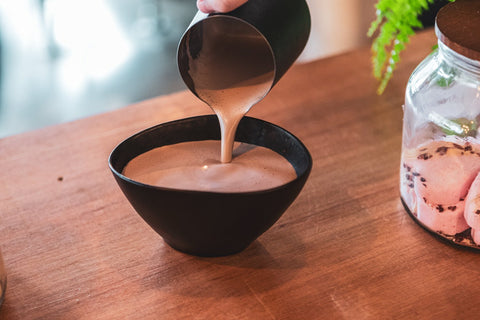
For the Maya and Aztecs, the quality of a cacao drink was judged not only by flavour, but by the foam on top. Froth was a sign of care, skill, and value. It was created by pouring the drink repeatedly from one vessel to another, intentionally aerating it rather than simply mixing it.
This aeration did more than change how the drink looked. It softened the intensity of the cacao, opened its aroma, and transformed the texture on the palate. Froth carried scent as much as flavour, making the experience fuller and more expressive. It also slowed the act of drinking itself, encouraging presence rather than speed. There was a practical side too. Froth helped prevent a skin forming on the surface as the drink cooled, allowing cacao to be sipped slowly without interruption. This mattered in a culture where the drink was never rushed. Today, the technique has changed, but the principle remains. Frothing cacao allows the drink to open properly, both in flavour and texture, and invites a more considered moment. It turns a cup of hot chocolate into something closer to what it has always been: a drink that rewards attention.

A Simple Seasonal Ritual
This quiet winter season does not need force. It needs support.
Even a small shift, such as replacing coffee with hot chocolate once a day, can change the rhythm. Prepared with care, cacao becomes a simple ritual rather than a habit.
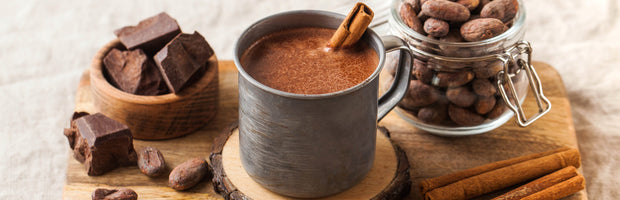
Traditionally, cacao is prepared with water to keep its flavour clean and direct, though milk can be used if preferred. Spices such as cinnamon, vanilla, chilli, or citrus zest can be added sparingly.
Heat gently. Dissolve slowly. Froth well. Taste before sweetening. Drink without rushing.
This time of year doesn't need fixing or big changes. It needs steadiness, clarity, and intention. Cacao has always been about exactly that.
How to make Hot Chocolate the Kakaw way
The Traditional Feel Recipe
-
Chocolate: 50g of 100% chocolate
-
Liquid: 250ml water (Water keeps the cacao clean and direct, reflecting its historical consumption. Milk can be used to soften the bitterness.)
-
Spices to Taste: A vanilla pod, cinnamon, chilli, or nutmeg
The Method
-
Heat Gently: Warm the liquid gently.
-
Dissolve Slowly: Add the chocolate and whisk slowly until it is completely dissolved.
-
Infuse: Add your spices now: a pinch of chilli for warmth, cinnamon for roundness, or orange zest to lift the aroma.
-
Froth Well: Use a frother to create a substantial foam - this is the most important part of the texture.
-
Taste Before Sweetening: Taste the pure bitterness first. If needed, add only a small amount of honey—just enough to soften the edges, not enough to mask the cacao.
-
Drink Slowly: Cacao was never meant to be rushed.
Thank you for reading this months Chronicle.
If we've piqued your interest and you're tempted to try a slower, more intentional approach to your daily cup, why not explore our range of hot chocolates?
Each one is crafted with the same care and purpose we've been talking about, using quality cacao that's designed to be savoured rather than rushed.
We can deliver them straight to your door, so all you need to do is heat, froth, and enjoy.