The second half of the year begins this month, and with it a fresh chance to turn plans into action for the rest of 2026.
And for those of us who love chocolate, July holds something else too. The 7th of July is World Chocolate Day, a day that matters to us at Kakaw. Not because cacao needs a reason to be celebrated, but because it is a good excuse to stop and reflect on something we spend a great deal of time thinking about: why cacao matters, where it comes from, and the quiet things a good cup carries that many people are unaware of.
This month, we wanted to explore that a little further.
What good cacao carries- Magnesium, one of the richest plant based sources there is- Iron, in a notable plant based form- Flavanols, the naturally occurring antioxidant compounds behind dark cacao's depth and character- Theobromine, the gentle stimulant almost unique to cacao, behind a cup's slower, softer lift than coffee- And a handful of trace compounds, phenylethylamine and anandamide among them, long associated across folklore with pleasure, warmth and connection


Cacao has been valued for a very long time.
Long before chocolate became the product we know today, cacao was understood as something restorative. The Mayans and Aztecs prepared it not only as a ritual drink, but as a remedy, something used to strengthen the body, lift the spirit, and support endurance through periods of real physical and mental demand.
Cacao was so highly valued in these cultures that it was used as currency, offered to the gods, and reserved for warriors and rulers. It was never considered ordinary. It was considered essential.
What is striking is how much of what they prized is still recognisable in the bean itself.
Modern analysis of raw and minimally processed cacao finds a remarkable concentration of naturally occurring compounds, flavanols, magnesium, iron and theobromine among them, the same things those cultures valued without ever having the words for them.
Cacao is one of the most concentrated plant sources of magnesium there is, a mineral a great many of us fall short on in modern life. That alone is part of what makes a good cup feel like more than an indulgence.

The flavanols, found in greater concentration in darker and less processed cacao, are among the antioxidant compounds that give it its depth. They are also among the first things lost when chocolate is heavily refined and sweetened, which is part of why how a cacao is made matters as much as where it comes from.
Then there is theobromine, the gentle stimulant almost unique to cacao. Its character is quite different from caffeine: slower, softer, longer lasting, a quiet lift rather than a spike, which is why a well made cup tends to feel nourishing rather than unsettling.
It is worth mentioning iron too. Cacao is a surprisingly good plant based source of it, one more thing carried quietly in the cup.
The mental and emotional associations are harder to pin down, and best not overstated. Cacao carries trace compounds, phenylethylamine and anandamide among them, that folklore has linked for centuries to pleasure, warmth and connection. We are happy to let those keep a little of their mystery.
What we have always felt, more than any single compound, is that cacao rewards a consistent relationship rather than a one off. It is less about a single cup and more about returning, regularly, to something genuinely good and made with care. That is what we encourage at Kakaw.
Quality matters enormously here. The more processed a chocolate is, the less it resembles what those ancient cultures revered, and the less it resembles the cacao we choose to work with.
A word from Szilard.
Szilard, Kakaw's co-founder, has thought about this a great deal.
"It started as curiosity and quietly became a daily habit. There is something about preparing a cup with attention, water not milk and no distractions, that I look forward to whatever kind of day it has been. For me cacao has never really been about indulgence; it is about taking a few minutes to do one thing properly."
Enjoyed for what it is.
None of this makes cacao a cure or a supplement, and we would never present it as one.
At its best it is still simply something to be enjoyed slowly, with attention, and without expectation. But there is something quietly reassuring in knowing that the thing you already reach for on a difficult morning, or a slow afternoon, or a day when you want something warm and grounding, also happens to be one of the more remarkable things a plant can give us.
And that, we think, is worth remembering.
A July ritual
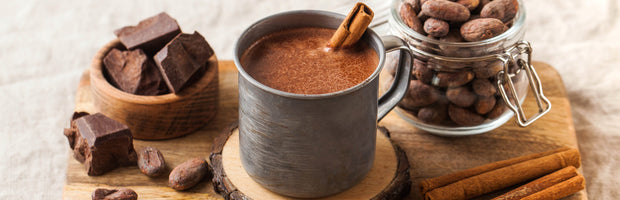
On the 7th of July, or any day this month, make your hot chocolate a little more intentionally.
Choose something with a higher cacao content. Prepare it with water rather than milk if you can, the way it was originally intended, so the flavour and everything within it comes through clearly. Sit somewhere quiet with it. No phone, no distractions. Notice how it feels, not only how it tastes.
That, in its simplest form, is what World Chocolate Day means to us. A moment to remember that cacao has always been more than a treat. It has always been something worth taking seriously.

Thank you for reading this month's Chronicle. July is a good time to celebrate what cacao really is: not just a flavour, but something with real depth, real history, and real character. We hope World Chocolate Day on the 7th gives you a reason to pause and enjoy it properly.
Whether that means trying something new from our collection, visiting us in Kendal, or simply making your morning cup with a little more care than usual, we think that is worth celebrating.
As always, you are warmly welcome to explore our collection and find the cacao that feels right for you.